KL's Story

We got to know KL during our Day Care session at the Palliative Care Unit Ward, Selayang Hospital. KL
had always wanted to go to the seaside, so we took her to Port Dickson. I will never forget that
beautiful smile of hers as she looked at the sea.
She was again admitted to the PCU Ward in March and we started our “Sitting with KL” sessions a couple
of weeks after that.
My deep and sincere gratitude to all my fellow Kasih Hospice Day Care volunteers who were so committed
to accompanying and sitting with KL till the very end of her journey. I know KL would want me to
convey her deep appreciation to each and everyone of you again and again.
She was one of the most beautiful beings and souls whom I had the honor to meet and spent some time
with — she was simple and pure at heart and yet always so generous with her kindness and love for
others around her. Her quiet strength and determination were something I would always admire and
remember.
When I left her that Monday evening (the last sitting with KL), she looked really, really peaceful.
When I touched her to bid goodbye, her hands were cold, and I thought to myself, it would be Wesak Day
the next day.
And KL passed on in the early hours of Wesak Day in her sleep. Farewell KL.
Mrs M's Story

Mrs. M was the primary caretaker of her 60-year-old husband with Advanced Colon Cancer, and they were
an elderly couple living alone in Petaling Jaya. Mrs. M shared how being an end-of-life care patient
during the Covid-19 pandemic is one of the most frightening things a carer can experience.
“There are fears of going to the Covid hospital, fears that nobody would answer my questions, fears of
facing emergencies alone, fears of dying alone, fears of the actual process of dying itself. Help is
not at hand as it’s MCO (Movement Control Order) time, and we didn’t know what was going to happen day
by day.”
Luckily Kasih Hospice had made available an Oxygen Concentrator that enabled Mr M to leave the
hospital and spend his final days at home where he preferred to be. Our hospice’s Senior Palliative
Doctor, Dr. Vanitha, handled Mrs M’s case via a combination of both frequent teleconferencing and
supportive home visits in full PPE.
One morning, Mrs M called up Dr. Vanitha in tears to share her foreboding feeling that Mr. M was going
to pass away soon. Our doctor assured her that Mr. M was comfortable and that the family had done
everything they could. Mrs M read aloud the poems that Mr. M had written for his family over the
years.
As Mr M was taking his last breath, Mrs M managed to videocall her children, and they witnessed Mr.
M’s passing, together as a family.
Tuti's Story

We would like to introduce our hero, Tuti, who works as a home helper in Malaysia. Tuti came to know
about Kasih Hospice 4 years ago. Even at that time, her generosity and spirit compelled her to donate
RM 10 to our cause. She has since been annually making contributions of RM 10 to RM 20 to Kasih from
her savings.
This year when Tuti found out about our “Shave for Palliative Care” campaign, she immediately made a
pledge of RM 500, which she dedicated to the mother of her employee as well as to all the Covid
patients in Malaysia.
Her compassion and nobility bought tears to our eyes. To us, this donation is one of the most valuable
gifts we received; because we know what it takes – as any witness will.
The true cost of a single dollar differs from person to person. We know that Tuti went without, so
that others would not have to. Tuti wanted to give up the things she thought she didn’t need, so that
those who need them more than her might benefit.
Let us fold our palms for Tuti, who inspires and humbles us, and who is a Great Teacher on the true
art of compassion, nobility, and faith in humanity.
Thank you for being an example to us all.
The last 10 years (Part 1)

When a hospice nurse steps into a patient’s home, they are not just entering a medical case — they are
stepping into someone’s life, into a family’s most vulnerable moments.
Every visit brings new challenges, from managing pain and symptoms to comforting anxious loved ones and a
djusting to different home environments. The job is both physically and emotionally demanding. Nurses spend
hours on the road, traveling from one home to another, sometimes under the scorching sun, sometimes through
pouring rain—often alone, without the immediate support of colleagues like they would have in a hospital.
But through it all, they rely on their skill, resilience, and deep compassion to provide the best care
possible. It’s more than a job—it’s a calling, one that requires immense dedication and heart.
How did you come to work for Kasih Hospice Foundation?
SN Sunita Kaur: “When I returned to Malaysia after 11 years as a nurse in Saudi, I worked with an agency to
find a job in a local hospital. Most of the roles I interviewed for were supervisory positions, but they
didn’t really interest me—I wanted something more hands-on and patient-focused.
That’s when I came across Kasih Hospice Foundation and learned about the free medical services they provide for
patients at the end of life. I was immediately drawn to their mission. My interview with Dr. Siow for a nursing
position at KHF lasted three hours—we had so much to discuss, and the conversation just flowed. I knew then that
this was where I wanted to be.”
SN Ruzanah Mohd Noor: “I used to work as an ICU nurse, but after 10 years, I found myself wanting a change.
Shift work was tough, especially since my husband was also working shifts—we barely saw each other. I also wanted to
spend more quality time with my family. Joining Kasih Hospice Foundation, with its more structured hours, has given me
the balance I was looking for, allowing me to be there for my loved ones while continuing to do meaningful work.”
SN Nurul Izza Yusub: “I've always known that I wanted to help people, but it wasn’t until I watched One Litre
of Tears that I truly understood my calling. The story’s resilience and compassion deeply moved me and planted the seed
for my journey into hospice nursing.
After spending a few years in a hospital setting, I decided to take the next step
and enrolled in the Post Basic Palliative Training for nurses. I was part of the pioneer batch in this program,
which prepared me for the meaningful work I do today at KHF.”
When women cares
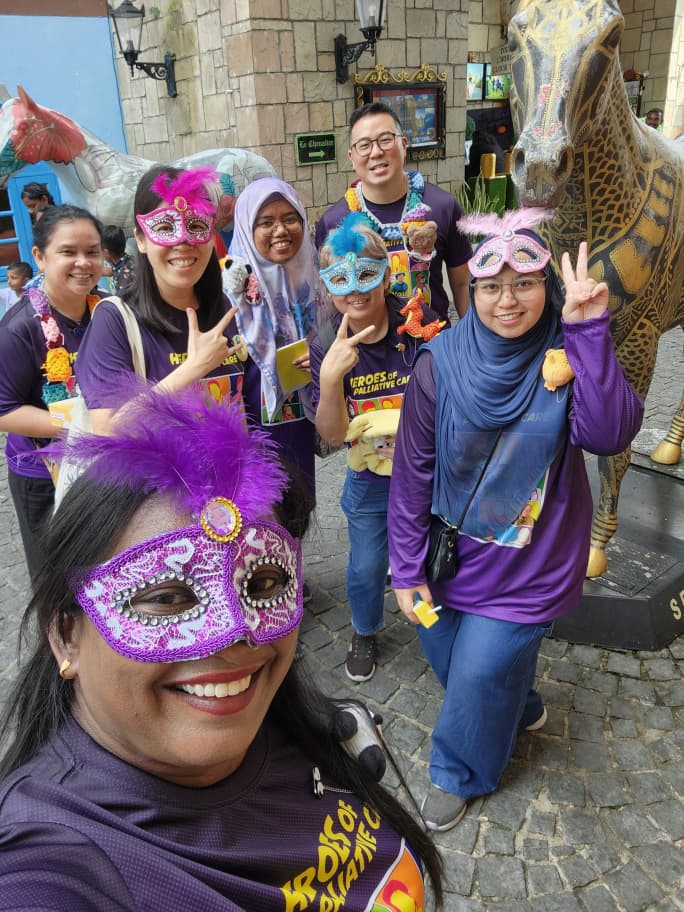
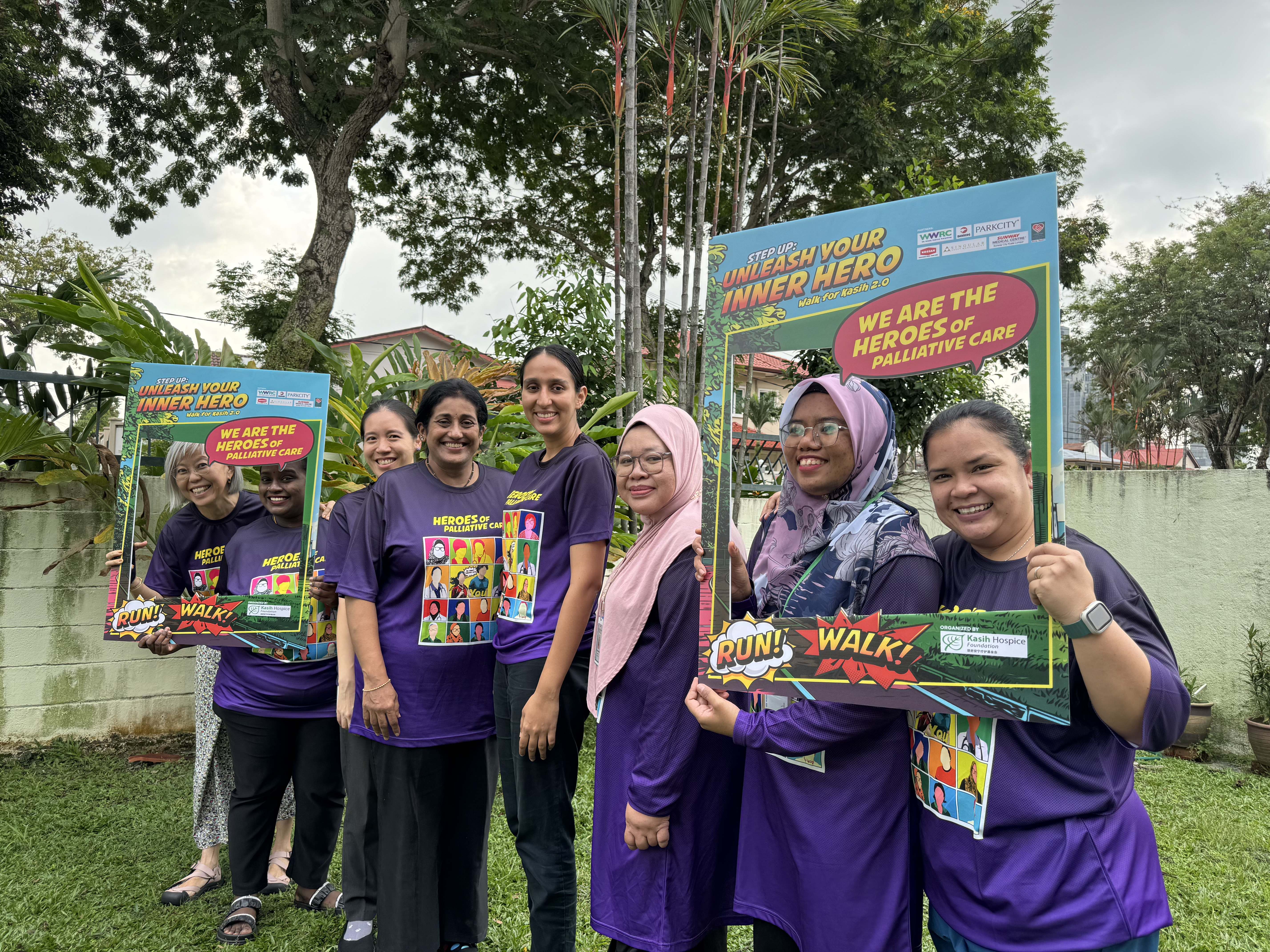
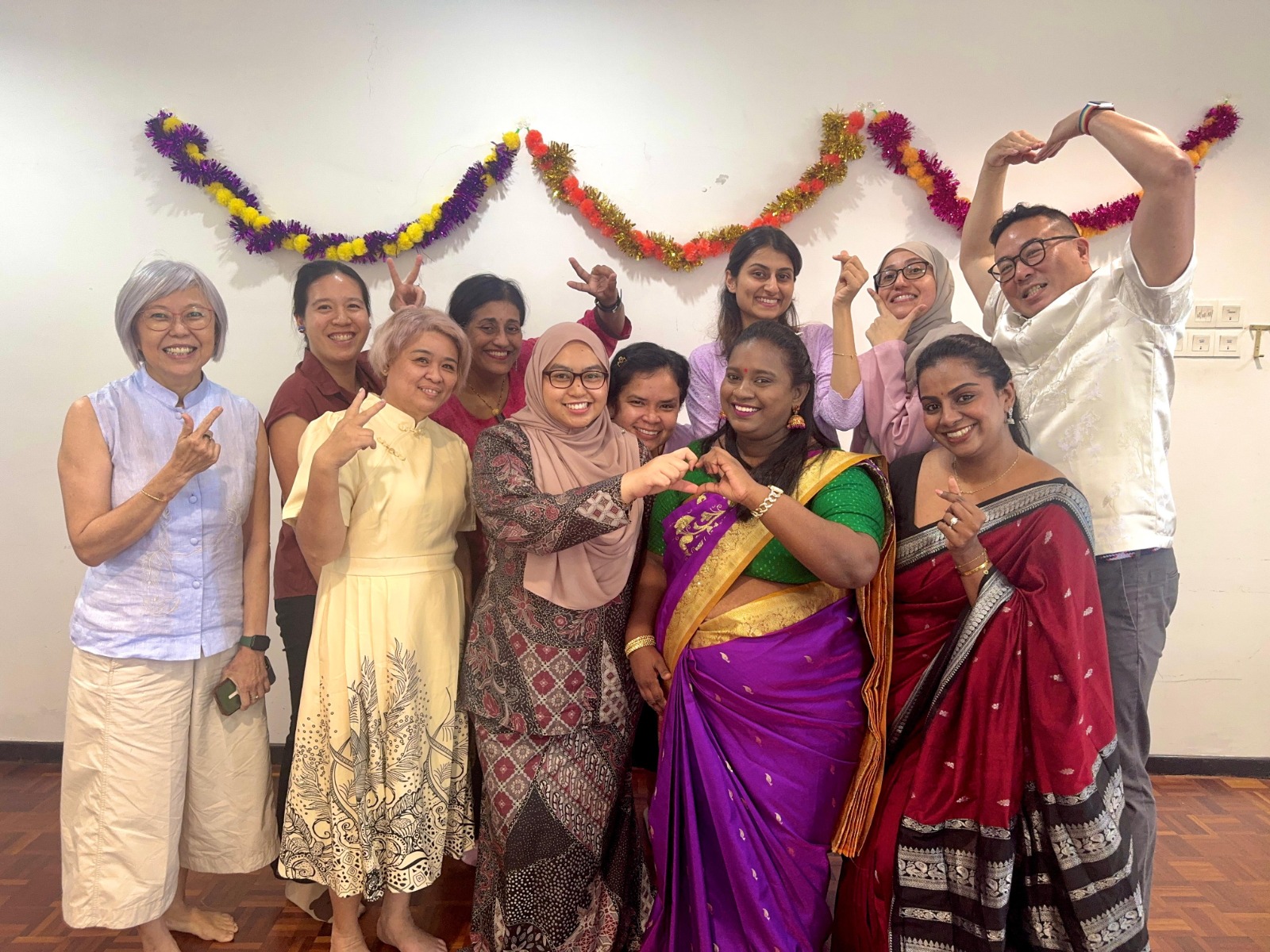
The Women Behind Every Home Visits: Stories from Our Hospice Team
At Kasih Hospice Foundation, care rarely happens in hospital corridors. It happens in living rooms,
beside worn armchairs, at dining tables that have seen decades of family meals. It happens quietly.
In our community hospice model, our doctors and nurses travel alone to patients’ homes.
Each has her own coverage area.
Most days are spent on the road, moving between homes, managing symptoms,
answering hard questions, and sitting with families who are learning —sometimes slowly, sometimes suddenly — that time is limited.
There isn’t much opportunity to gather as a team and reflect. The work is often solitary.
So this International Women’s Day, I asked a few of them:
"What have you given — and what have you received — from being part of Kasih Hospice Foundation?"
Dr Justine, who joined us in 2023, spoke about time.
She gives it generously — not only to manage pain or adjust medications, but to listen.
To hear the fears that surface late in the illness. The regrets. The unfinished business.
“In every situation, the outcome is death,” she reflects. “But what we do in between matters.
”What she has received is a clearer sense of purpose. Caring for patients in their homes — many of
whom may not thrive within the pace and structure of hospitals — has deepened her understanding of what medicine can
look like outside institutional walls.
Nurse Jasrina, who joined in June 2025, reflected on connection.
Coming from a hospital setting, she noticed the difference immediately.
In hospice, she is able to use her clinical knowledge while building real relationships with patients and families.
The work is less routine, more personal. She gives her skills and steady presence;
in return, she gains the privilege of being trusted in very intimate moments of a family’s life.
Sakinah, our administrative support, does not step into patients’ homes — but her role holdsthe work together.
She keeps referrals moving, answers calls, coordinates logistics,
and often does it all with a calm and cheerful steadiness that lifts the office.
Her smile brightens the room.
While she may not be at the bedside, she knows she is part of every visit that happens.
In return, she has learned from the doctors and nurses around her — growing in knowledge and in appreciation for what hospice care truly involves.
Each woman plays a different part.
One sits at the bedside adjusting medications.
One builds trust through quiet conversation.
One ensures the system runs so care can happen at all.
Their roles are not identical, and their days look very different.
But together, they make it possible for patients to remain at home,
with dignity and comfort, surrounded by the peoplewho matter most.